A surface that makes the aircraft burn less
AeroSHARK is a bionic surface that copies the skin of a shark. It does not change how an aircraft looks — it changes how the air moves across it. LXM AERO installs it, and does the certification and engineering behind it.
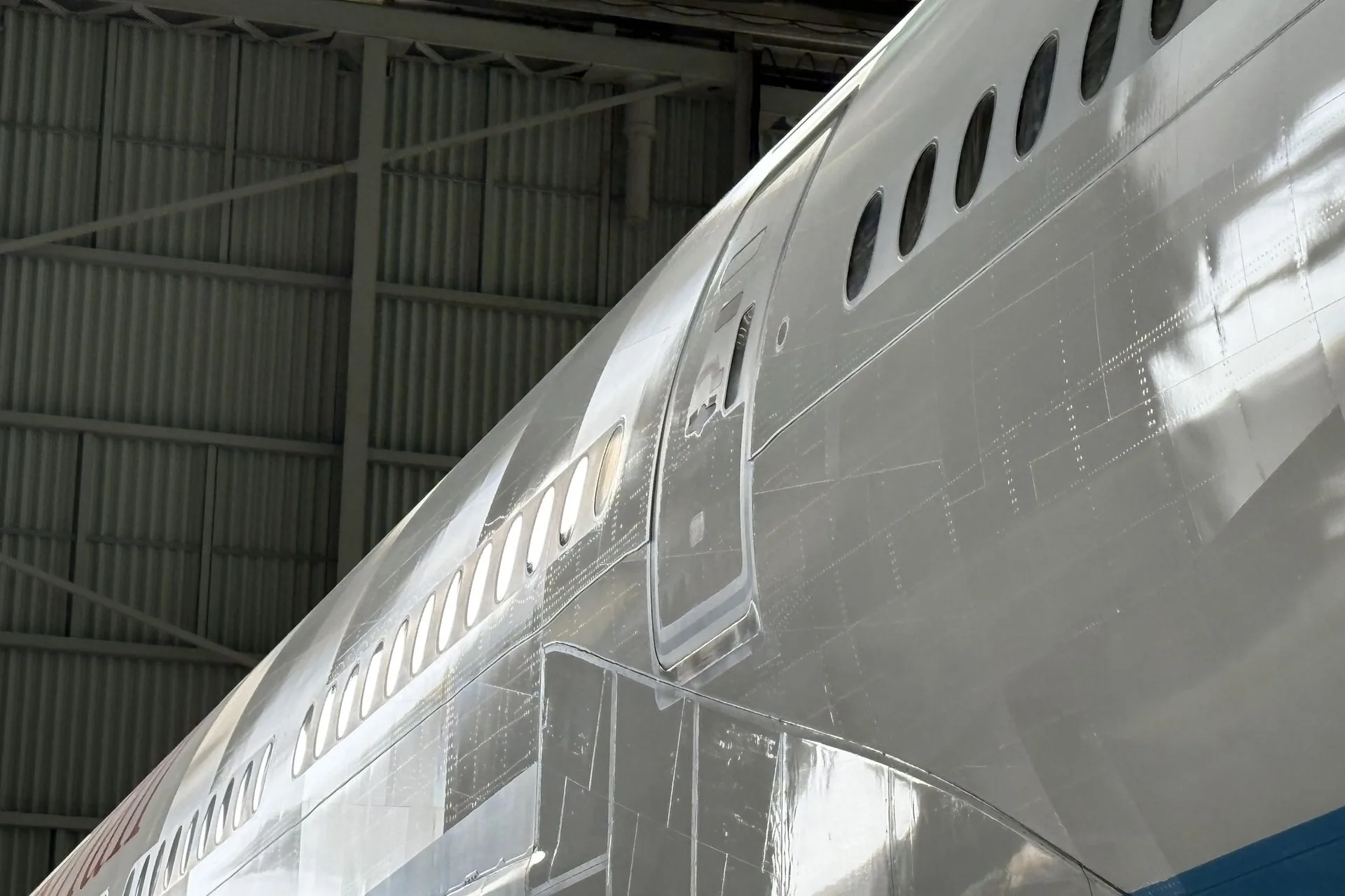
Most of what we apply to an aircraft is there to be seen. This one is there to be flown. AeroSHARK is a durable bionic surface that mimics shark skin: it orders the airflow close to the fuselage, reduces drag, and with it fuel burn and CO2.
AeroSHARK was developed by Lufthansa Technik and BASF. LXM AERO is an official AeroSHARK Solution Partner for the installation, working alongside Lufthansa Technik and Lufthansa Group airlines with a sizeable team of project engineering and installation specialists — and providing the full certification and engineering scope for these projects.
A surface that is not smooth on purpose
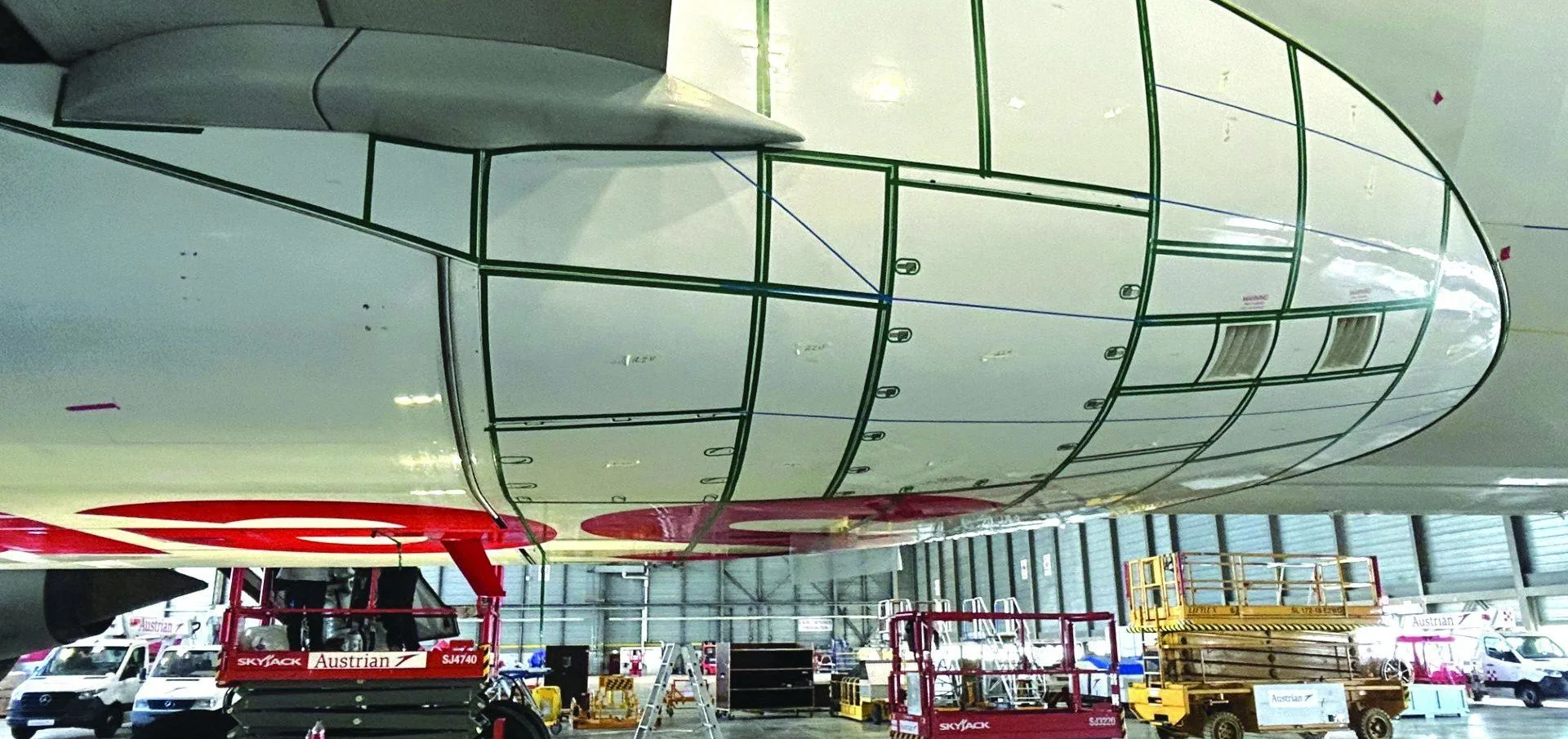
Applied where the aircraft already is
The same on-site model as our livery programmes: the team, the access equipment and the material travel to the hangar the aircraft is in. A fuel-saving measure that costs weeks of ferrying and downtime would take years to pay for itself.
Three fleets, one surface technology
Across the Lufthansa Group’s AeroSHARK fleet this comes to around 18 metric tonnes of kerosene and around 57 metric tonnes of CO2 avoided every day. A livery saves emissions once, by avoiding a ferry flight; a riblet surface saves them on every sector it flies — which is a reasonable argument for treating the surface of an aircraft as an engineering question rather than a cosmetic one.
What this project was made of
Planning a functional surface programme?
Riblets, protective layers or any surface modification that has to be applied precisely and at scale. Tell us the type, the fleet size and the maintenance windows available, and we will tell you what a realistic rollout looks like.